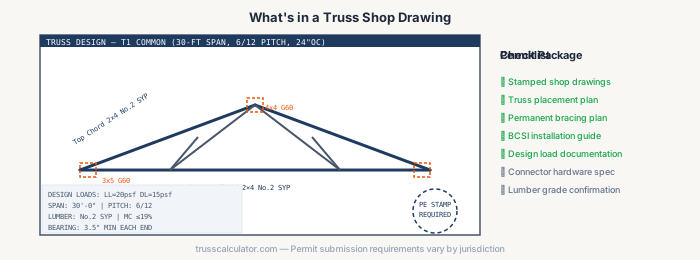
Quick Answer: Most building departments require stamped truss engineering drawings from the manufacturer, a truss placement plan showing each truss location and type, and a bracing plan per BCSI standards. Pre-built trusses include this documentation automatically. For site-built trusses, you'll need to hire a structural engineer.
Navigating the permit process for roof trusses is straightforward if you know what to gather before you submit. Building departments vary in their requirements, but there's a core set of documents that virtually every jurisdiction expects.
Calculate your truss geometry first using our truss span calculator. You'll need the peak height, rafter length, and truss count for your permit application before you order or fabricate anything.
What a Permit Submission Typically Requires
1. Stamped Truss Engineering Drawings (Shop Drawings)
When you order trusses from a manufacturer, they provide stamped engineering drawings. A licensed Professional Engineer (PE) employed by the fabricator has reviewed the design for your specific loads, spans, and lumber specifications.
These shop drawings show:
- Truss profile (shape and dimensions)
- Lumber species and grade for each member
- Metal connector plate sizes and locations
- Design loads (live, dead, snow, wind uplift)
- Allowable deflection under design load
- Bearing requirements (bearing length and support conditions)
- The engineer's stamp and signature
Most building departments accept these manufacturer drawings without additional structural review. Some jurisdictions require the drawings to be submitted before the permit is issued; others allow them to be submitted at the framing inspection stage.
For site-built trusses: You'll need a licensed structural engineer to review and stamp your design. Budget $500–$2,000 for engineering fees depending on complexity. Some building departments will accept drawings from a design-build truss engineer without a separate project PE, but verify this before you start building.
2. Truss Placement Plan
Separate from the shop drawings, most jurisdictions want a plan view (top-down drawing) showing:
- Which truss type goes at which location (by label: T1, T2, hip trusses, etc.)
- The spacing between trusses
- The location of any special trusses: girder trusses, hip trusses, valley sets
- The direction of installation (which end faces which wall)
Your truss manufacturer typically provides this layout plan as part of the fabrication package. If they don't, ask specifically. It's a reasonable deliverable and shouldn't cost extra.
3. Permanent Bracing Plan
IRC Section R802.10.3 requires permanent lateral bracing to be installed per the truss manufacturer's recommendation. Most building departments want to see this specified in the permit package.
The BCSI (Building Component Safety Information) document from the SBCA is the standard reference. Your truss fabricator's drawings should include permanent bracing requirements. If they don't, request a copy of the bracing plan.
Key elements a building official will look for:
- Diagonal bracing in the plane of the top chords (typically at the first interior web panel)
- Lateral restraint at specified intervals on long compression chord members
- Connection details for how the bracing attaches to the trusses and to a stiffening element
4. Structural Notes on Your House Plans
Your architect or designer should note on the structural plans that trusses are used and reference the shop drawings. Something like: "Roof framing: pre-engineered wood trusses per manufacturer's shop drawings and BCSI installation guide." This cross-reference satisfies the plan reviewer who's looking at your permit set.
What Building Officials Actually Check at Framing Inspection
During the framing inspection (typically after trusses are set but before sheathing), the inspector will verify:
Bearing conditions: Are the trusses bearing on the full required length of top plate? Typical minimum is 3 inches. Inspectors look for trusses that have shifted off-bearing or are only touching the plate at a corner.
Connector hardware: Are hurricane ties or H clips installed at every truss-to-plate connection? Are they the correct model specified in the shop drawings? In wind-critical zones, this gets close scrutiny.
Permanent lateral bracing: Is the specified bracing installed? Are the diagonal ties from the bracing back to stiff points (end walls or vertical framing)?
No modified trusses: Are any web members cut, notched, or damaged? Inspectors look specifically for utility openings in web members that weren't in the approved drawings.
Proper truss identification: Many jurisdictions require that truss bundles remain tagged with the fabricator's name and the job number until inspection is complete. Don't remove bundle tags before the framing inspection.
Getting Ahead of Common Permit Issues
Insufficient Snow Load Design
If you live in a high snow load zone and you order trusses without specifying the design snow load, the fabricator will use a default value. That default may not match your jurisdiction's required design load. Before ordering, check your local code or ask your building department for the required "ground snow load" and "roof snow load" values. Provide these to your fabricator explicitly.
Ceiling Load Not Accounted For
If you plan to install drywall or any ceiling system hung from the truss bottom chords, the trusses must be designed to carry that dead load. Standard residential trusses assume 15 psf total dead load including ceiling. If you're adding a heavy acoustic tile ceiling or mechanical equipment, inform your fabricator.
Hip Roof Complexity
Hip roofs require a different set of truss types (common trusses, hip trusses with a sloped end, and jack trusses) in addition to the standard gable-end framing. The engineering package becomes more complex, and some building departments want the hip framing specifically shown on the placement plan. Confirm with your building department what level of detail they need before ordering.
Practical Timeline for Permit Submission
1. Finalize your building dimensions: verify span, length, and pitch using our truss dimension calculator
2. Submit your permit application: include your architectural plans with truss notes
3. Order trusses from your fabricator: provide confirmed dimensions and local design loads
4. Receive shop drawings from fabricator: typically 1–2 weeks after order
5. Submit shop drawings to building department: most departments accept these at permit issuance or before framing inspection
6. Install trusses per BCSI and manufacturer instructions
7. Pass framing inspection: have shop drawings and BCSI documentation on-site
For detailed guidance on what to measure before you order, see our building span measurement guide. For the actual installation steps and common mistakes that fail inspections, read our truss installation mistakes guide.