Quick Answer: Truss installation requires a crane (or telehandler), at least 3 people on the ground, temporary diagonal bracing before the crane releases, and permanent bracing before sheathing. The whole process on a standard house takes 1–2 days with an experienced crew.
Setting roof trusses is one of the faster milestones in residential framing, but also one of the highest-risk. When done right, 25 trusses can be set and braced in a single morning. When done wrong, a collapse can happen before noon.
This guide covers the full installation sequence from delivery to ready-for-sheathing. Before you start, verify your truss count and dimensions using the truss calculator, and make sure you have the manufacturer's shop drawings and BCSI installation guide on-site.
Before the Trusses Arrive
Verify Your Wall Plates Are Ready
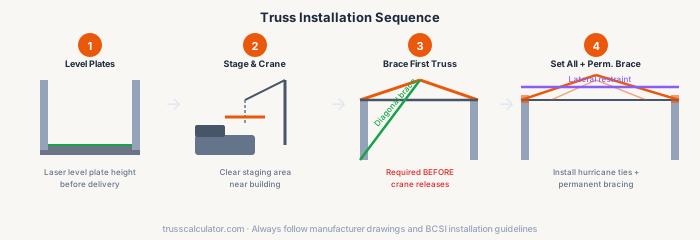
The truss bearing surface must be level across the entire building and at the correct height. Check the top of your exterior wall plates with a long level or laser level before delivery day. If one wall is 3/4 inch higher than the other, the trusses will rock when set. Fix it now, not after the crane is on the clock.
The plate width must match what the fabricator designed. If you specified a 2×6 top plate and the fabricator designed for 3.5 inches of bearing, verify you have double 2×4 plates (which give you 3.5 inches) or double 2×6 plates in place.
Prepare Your Staging Area
Trusses will be delivered bundled flat on a truck. You need a clear staging area next to the building where the crane can pick them individually. A 30-foot truss is heavy and awkward. Stage it where the crane can reach it without moving the truck.
Clear any overhead lines or obstacles in the crane's swing arc. Know where the crane will sit (the driver will want to see the site before unloading). Crane operators work fast; if the site isn't ready, you're paying for idle time.
Gather Your Tools and Crew
Minimum crew for setting trusses:
- 1 crane operator
- 2 people on the walls (one per side) to receive and position each truss
- 1 person on the ground to help with rigging and temporary bracing
You'll need: 2×4 lumber for temporary bracing, a nail gun or hammers, 16d framing nails, framing squares, chalk lines, the manufacturer's layout diagram, and your specified hurricane tie connectors.
The Installation Sequence
Step 1: Establish Your Layout Lines
Before the crane starts, snap chalk lines on the top plates at every truss location. This is faster and more accurate than measuring at height during installation. Transfer the spacing from the manufacturer's truss placement plan and mark T1, T2, etc. at each location.
Mark the centerline of each truss location, not the edge. Each truss will be positioned so its centerline aligns with your chalk mark.
Step 2: Set and Brace the First Truss
The first truss is the most critical. It must be:
- Plumb (verified with a level or plumb bob from the ridge to the plate)
- Located at the correct end position
- Braced before the crane hook is released
BCSI requirements for the first truss brace: install a minimum of three diagonal braces from the top chord to the end wall studs. These diagonals should be 2×4 minimum, angled at approximately 45°, and nailed with at least 3-16d nails at each end.
Do not proceed to truss 2 until the first truss is plumb and braced.
Step 3: Set Subsequent Trusses
With the first truss braced, subsequent trusses go faster. The crane picks each truss, the wall crew guides it into position at the chalk marks, and you toenail the bearing ends to the plate (2-16d nails per side, minimum, before permanent connectors are installed).
Set 4–5 trusses before installing lateral restraint. Install a 2×4 "run board" (also called a lateral restraint or strongback) along the top chords at a point specified in the manufacturer's drawings, typically at the first interior panel point. This board keeps all the trusses aligned and prevents domino collapse.
As you continue setting trusses, add lateral restraint boards and diagonal bracing between every 3–5 trusses. Don't wait until all trusses are set to install bracing. If wind picks up before you do, you have no redundancy.
Step 4: Install Permanent Hardware
After all trusses are set and temporarily braced, install the permanent connector hardware:
- Hurricane ties/H-clips: One per truss at each bearing point. The fabricator's drawings specify which connector model is required. Face-nail through the connector flange into the truss chord and into the wall stud below the plate.
- Truss clips at gable ends: Gable-end trusses often need additional connector hardware. Check the shop drawings, as these vary by manufacturer.
- Web lateral restraint: Anywhere the shop drawings show "LR" (lateral restraint), install a 2×4 perpendicular to the trusses nailed to the specified web member, plus a diagonal tie back to a stiff point.
Step 5: Install Permanent Diagonal Bracing
Once all permanent hardware is in place, install permanent diagonal bracing per the shop drawings. This is different from temporary bracing. The permanent bracing carries loads for the life of the structure.
Common permanent bracing locations:
- Top chord plane: diagonals at the first interior panel point, connecting back to the gable end walls
- Bottom chord plane: not always required, but specified in high-wind zones or long-span applications
The BCSI document specifies minimum sizes and nailing for permanent bracing. Your building inspector will verify this at the framing inspection.
Step 6: Verify Before Sheathing
Before sheathing begins, do a final check:
- All trusses are plumb (use a long level against the web members)
- All hurricane ties are installed and nailed correctly
- Permanent lateral restraint is installed at all specified locations
- Permanent diagonal bracing is installed and nailed
- No trusses have damaged web members, bent chords, or displaced connector plates
Only once all this is verified should you start nailing sheathing. The sheathing acts as a diaphragm. Once it's on, the trusses are locked in whatever position they're in.
Common Installation Time Estimates
| Building Size | Truss Count | Setting Time (with crane) | Total Installation Day |
|---|---|---|---|
| 24×24 ft | 13 trusses | 2–3 hours | 1 day |
| 30×40 ft | 21 trusses | 3–4 hours | 1.5 days |
| 40×60 ft | 31 trusses | 4–5 hours | 2 days |
These are estimates for experienced crews with a crane. Owner-builders doing this for the first time should add 50–100% to these timelines.
Use our truss count calculator to get your exact truss number before you schedule the crane and crew. See also our common truss installation mistakes guide for what inspectors look for at the framing inspection.