Quick Answer: For most U.S. residential construction, a 5/12 to 6/12 pitch balances drainage, attic space, labor cost, and material efficiency. Go steeper only if your climate demands it or your design requires it.
Roof pitch is the single variable that affects nearly everything in truss design: peak height, rafter length, sheathing area, shingle count, and labor time on the roof. Change the pitch, and the entire bill of materials shifts.
This guide explains how pitch works, what each number means, and how to pick the right pitch for your project. When you're ready to run numbers, use our truss calculator to see exactly how pitch changes affect your truss geometry and costs.
What Roof Pitch Actually Means
Pitch is written as rise-over-run: 6/12 means the roof rises 6 inches for every 12 inches of horizontal run. The "12" is always the run; the first number varies.
The relationship to degrees: Pitch and degrees aren't the same thing. A 6/12 pitch equals approximately 26.6°, not 6°. To convert, use: angle = arctan(rise ÷ run). A 12/12 pitch is exactly 45°.
Half-span matters: The run in the pitch formula is measured from the outside wall to the ridge, which is half the building span for a symmetrical gable roof. A 30-foot-wide building has a 15-foot run. At 6/12 pitch, the peak rises: 15 × (6 ÷ 12) = 7.5 feet above the wall plate.
How Pitch Affects Peak Height and Rafter Length
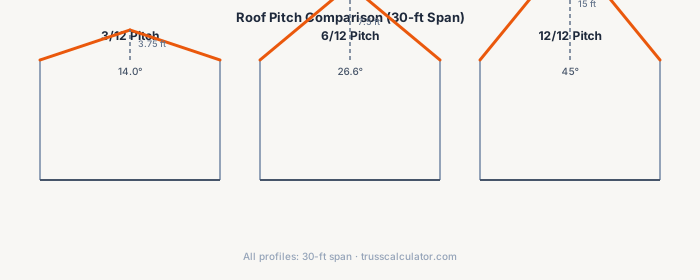
Here's what happens to a 30-foot-span roof at different pitches. All figures assume a 12-inch eave overhang.
| Pitch | Rise (degrees) | Peak Height | Rafter Length |
|---|---|---|---|
| 3/12 | 14.0° | 3.75 ft | 15.6 ft |
| 4/12 | 18.4° | 5.0 ft | 16.3 ft |
| 5/12 | 22.6° | 6.25 ft | 17.1 ft |
| 6/12 | 26.6° | 7.5 ft | 17.9 ft |
| 8/12 | 33.7° | 10.0 ft | 19.7 ft |
| 10/12 | 39.8° | 12.5 ft | 21.7 ft |
| 12/12 | 45.0° | 15.0 ft | 23.7 ft |
You can verify any of these numbers using the roof truss dimension calculator. Enter the span, pitch, and overhang to see rafter length and peak height instantly.
Code Minimums and Material Requirements by Pitch
The International Residential Code (IRC) Section R905 sets minimum pitch requirements for different roofing materials. These matter: if you pick a roofing product before you set the pitch, you may be locked into a slope range.
- Asphalt shingles: Minimum 2/12 (with ice and water shield underlayment required below 4/12)
- Metal roofing panels: Minimum 1/4/12 for standing seam; 3/12 for exposed fastener panels
- Clay and concrete tile: Minimum 4/12 in most jurisdictions; some manufacturers require 4.5/12
- Wood shingles: Minimum 3/12; 4/12 recommended for longevity
- Slate: Minimum 4/12
Going below these minimums voids most manufacturer warranties and can trigger code violations during inspection.
Low Slopes (3/12 and Under): When They Make Sense
Low-pitch roofs are cheaper to frame because the rafter lengths are shorter and you need less sheathing. They also suit certain architectural styles. Flat or nearly flat roofs are standard on contemporary and commercial buildings.
The trade-off: water moves slowly off low-pitch roofs, which increases the risk of ice dams in cold climates and debris accumulation year-round. You'll need heavier-duty underlayment and roofing products specifically rated for low-slope applications.
In snow country, most engineers avoid low pitches on residential roofs unless the structure is designed for the additional snow load (which can be substantial; check your local ground snow load maps).
Mid-Range Pitches (4/12 to 7/12): The Residential Sweet Spot
This is where the majority of U.S. residential construction lives. A 6/12 pitch gives you:
- Good drainage with standard asphalt shingles
- Usable attic space in most homes (roughly 4–5 feet of headroom at the center for a 28-foot span)
- Moderate rafter lengths that don't require spliced lumber
- Labor costs in the normal range: roofers can work a 6/12 pitch without specialty staging
Going from 5/12 to 7/12 on a 30-foot span adds about 1.5 feet to each rafter. That's roughly 3 extra linear feet of lumber per truss, multiplied by the truss count. Not dramatic, but worth knowing. Our truss cost estimator accounts for this in its cost model.
Steep Pitches (8/12 and Above): When Steeper Is Worth It
Steep roofs drain extremely well, shed snow passively, and look dramatic. They're common in Tudor, Cape Cod, and Victorian architectural styles.
The costs add up fast:
- Longer rafters: A 30-foot span at 10/12 pitch requires 21.7-foot rafters, more lumber per truss than at 6/12 (17.9 feet).
- More sheathing: Total roof area grows substantially with steep pitches. A 30×40-foot building at 6/12 has about 1,500 sq ft of roof surface; at 10/12, that climbs to roughly 1,900 sq ft.
- Labor premium: Above 8/12, most roofing contractors require fall protection and staging, which adds cost.
- Material waste: Steeper roofs have more complex cuts at hips, valleys, and dormers.
For a detailed cost breakdown by pitch, see our 2026 truss cost guide.
Attic Space and Pitch: What You Actually Get
People often choose steeper pitches expecting usable attic storage, then discover the webbing inside the trusses eats up most of the usable volume.
With standard Fink trusses on a 28-foot span:
- At 5/12 pitch: peak height is 5.8 feet, walkable in the center strip only
- At 6/12 pitch: peak height is 7.0 feet, comfortable to stand upright at the ridge
- At 8/12 pitch: peak height is 9.3 feet, usable as storage or finished room with the right truss type
If you specifically want a finished attic room, the pitch alone isn't enough. You need to discuss "room-in-attic" truss designs with your fabricator. These cost 20–40% more than standard Fink trusses but eliminate the interior webbing in the habitable zone.
Making the Final Call
Start with what your local climate and roofing product require, then work toward your budget and architectural goals. If you're in a 60 psf snow load zone, don't fight the code minimums. Accept a steeper pitch and design around it.
Plug your span and pitch options into our truss calculator to compare peak heights, rafter lengths, and estimated costs side by side. Ten minutes of number-running before you finalize your design can save a significant reframing cost down the road.
For a closer look at how truss types interact with your chosen pitch, read our roof truss types guide.