Quick Answer: Pre-built trusses from a manufacturer are better for spans over 20 feet, permit-required projects, and any home with a structural engineer of record. DIY site-built trusses make sense for small sheds, simple outbuildings, and situations where lumber is already on hand.
The question of DIY versus factory-built trusses comes up constantly in owner-builder forums and hardware store aisles. The short answer isn't one-size-fits-all. It depends on your span, your permit situation, your skill level, and whether you've run the actual numbers.
Before you decide, use our truss calculator to see what a factory-built order would cost for your project. Then compare that against the DIY cost breakdown below.
The Case for Pre-Built Trusses
Engineering Is Included
Every truss a manufacturer ships comes with stamped engineering drawings. A licensed engineer has reviewed the design for your stated loads, lumber species, and connection details. This matters enormously for permitted projects. Most building departments accept manufacturer engineering without additional review. If you build site-built trusses without stamped drawings, the building official may require you to hire an engineer to approve them after the fact, often at greater expense than just ordering from a factory.
Faster Installation, Less Waste
A crane can set 20–25 trusses in a morning. A crew framing site-built trusses might take 2–4 days to cut, assemble, and raise the same number. Factory trusses arrive pre-cut and ready to fly: no layout, no cutting, no rafter tails to notch.
Lumber waste is also dramatically lower with factory trusses. The manufacturer optimizes cutting patterns across hundreds of orders. Site-built trusses on a single project typically waste 8–15% of the lumber purchased.
Structural Consistency
Every truss from a modern plant is assembled on a precision jig with hydraulic press plates and quality-controlled connector plates. The chord splices and web connections are engineered for maximum strength. A DIY builder working on sawhorses in a driveway will have more variation in plate placement and nail spacing, which usually doesn't matter until it does.
The Case for Site-Built Trusses
Small Spans and Simple Structures
For spans under 20 feet (sheds, lean-tos, covered decks, small garages) site-built trusses are entirely reasonable. A simple King Post truss with good 2×6 lumber and proper gusset plates holds up for decades. The engineering is straightforward enough that most experienced DIYers can build them correctly.
A 12×16-foot shed needs about 9 King Post trusses. At 4/12 pitch with 16-foot span, each truss uses roughly 30 linear feet of 2×4 lumber. Figure $25–$35 per truss in lumber at current prices, call it $250–$315 total. A factory-built order for the same shed would run $600–$900 delivered. The math favors DIY for simple outbuildings.
No Building Permit Required
In many jurisdictions, detached structures under a certain size (often 200–400 sq ft) don't require permits. If your project falls into that category, you have more flexibility on construction methods. Check your local code, as the threshold varies significantly by municipality.
Lumber Already on Hand
Some owner-builders have salvaged lumber, milled timber on their property, or leftovers from a larger project. Repurposing that material into site-built trusses can dramatically cut costs. This works best for simple King Post or Queen Post configurations where you can verify the lumber grade and condition.
What Building Departments Expect
If your project requires a building permit, expect scrutiny on your truss system. Most inspectors look for:
1. Stamped engineering drawings: either from a truss manufacturer or a licensed structural engineer
2. Connector plate specifications: size, gauge, and placement of metal connector plates at all joints
3. Lumber grade markings: visible grade stamps on all framing members
4. Bracing plan: temporary and permanent lateral bracing per BCSI (Building Component Safety Information) standards published by the SBCA
Site-built trusses can pass inspection, but you'll likely need an engineer to stamp the design. Engineering fees for a simple truss design run $500–$1,500 depending on complexity. Add that to your DIY cost estimate before comparing it to factory pricing.
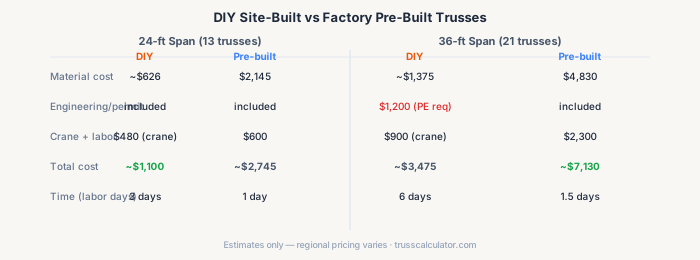
Real Cost Comparison: 24-Foot vs 36-Foot Span
24-Foot Span (small garage, 24×24 building, Fink truss, 24" OC)
Pre-built option:
- 13 trusses × $165 each = $2,145
- Delivery: $200
- Crane rental (2 hours): $400
- Total: ~$2,745
DIY option:
- Lumber (30 LF per truss × 13 trusses × $0.90/LF): $351
- Metal connector plates ($15/truss): $195
- Layout jig materials: $80
- Labor (3 weekend days): your time
- Total materials: ~$626
At 24 feet, the DIY savings are real: roughly $2,100 in materials, at the cost of 3 days of skilled labor and the risk of error in layout or connection.
36-Foot Span (standard home, Fink truss, 24" OC)
Pre-built option:
- 21 trusses × $230 each = $4,830
- Delivery: $250
- Crane: $900
- Installation crew: $1,400
- Total: ~$7,380
DIY option:
- Lumber (45 LF per truss × 21 trusses × $0.90/LF): $850
- Metal connector plates ($25/truss): $525
- Engineering stamp: $1,200
- Crane rental: $900
- Total materials + engineering: ~$3,475 plus 5–7 days of skilled labor
The gap narrows significantly at 36 feet, and the engineering complexity is higher. Most owner-builders who've priced this out find the factory option makes more sense at spans over 30 feet, especially when they value their time.
How to Decide
Ask yourself these questions:
- Is a permit required? If yes, lean toward factory trusses.
- Is the span over 20 feet? If yes, factory trusses are almost always worth it.
- Do you have construction experience? Site-built trusses require accurate layout, correct plate placement, and proper temporary bracing. These are not beginner tasks.
- Is your schedule tight? Factory trusses save days or weeks of framing time.
Run your dimensions through the truss count and cost calculator to get a factory baseline. Then compare it honestly against the DIY lumber cost plus any engineering fees and your labor time. The answer becomes clearer with real numbers in front of you.
For more on what can go wrong with site-built or improperly installed trusses, read our common truss installation mistakes guide.